Mount Agung Day Trip: The Ultimate Exploration Guide
To ensure a smooth mount agung day trip, consider these important preparations.
Planning Your Mount Agung Day Trip
Introduction to Mount Agung Hiking Adventure
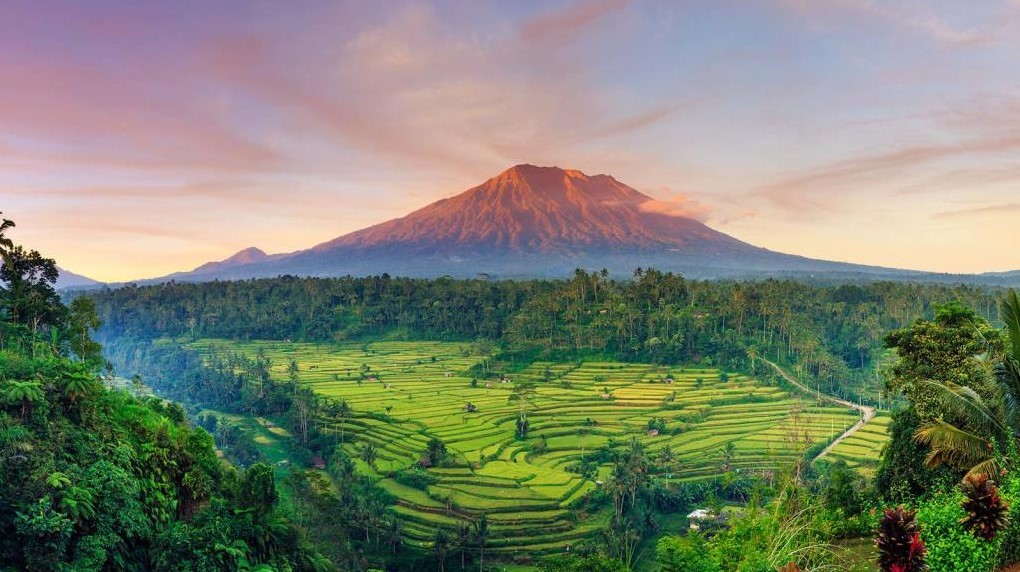
Mount Agung is not just another mountain in Bali—it’s the highest and most sacred volcano on the island, standing at approximately 3,031 meters above sea level. This towering stratovolcano dominates Bali’s eastern skyline and holds immense spiritual and cultural significance for the Balinese people.
For adventurous travelers, hiking Mount Agung is often considered the ultimate trekking experience in Bali. Unlike the more tourist-friendly Mount Batur trek, the Agung climb is longer, steeper, and far more challenging. But here’s the thing—those who make it to the top say the journey is nothing short of life-changing.
Imagine starting your trek under a blanket of stars, moving through dense jungle and volcanic rock while guided only by headlamps and moonlight. Hours later, as the sky slowly turns purple and orange, you reach the summit. Below you lies the entire island of Bali, floating above a sea of clouds.
That moment—when the sun rises over Lombok’s Mount Rinjani in the distance—feels almost surreal.
Many hikers describe the experience as a blend of physical challenge, spiritual journey, and natural wonder. You’re not just climbing a mountain; you’re stepping into a place that locals believe is the home of the gods. That spiritual energy, combined with raw volcanic beauty, makes the Mount Agung hike a bucket-list adventure for trekkers worldwide.
If you’re considering this epic trek, you’re probably wondering: How hard is it? When should you go? What route should you take? This guide covers everything you need to know before planning your mount agung day trip, including tips on the best time to take your mount agung day trip.
Why Mount Agung Is the Ultimate Trek in Bali
Bali is famous for volcano trekking, but Mount Agung stands in a category of its own. Many travelers first hike Mount Batur as an introduction to volcano trekking. But Mount Agung? That’s the real challenge.
The trek typically covers around 8 kilometers round trip with an elevation gain of roughly 1,500 meters, depending on the route you take.
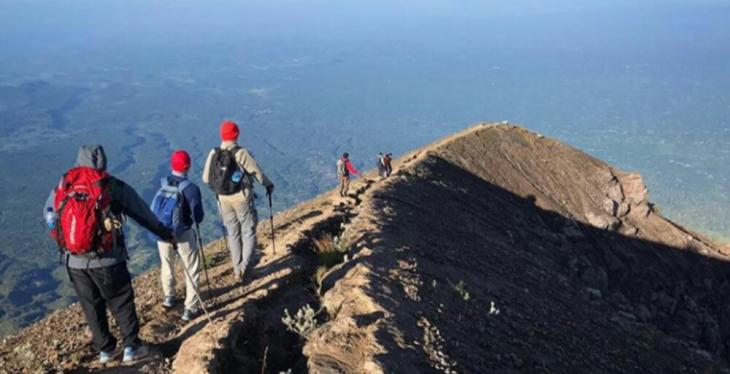
This might not sound too extreme on paper, but the terrain tells a different story. The mountain’s slopes consist of loose volcanic rock, steep inclines, and rugged ridges. At some points, hikers scramble over lava rocks or navigate narrow paths carved into the volcanic cone.
The climb usually begins around midnight so hikers can reach the summit by sunrise. That means trekking through darkness for several hours before witnessing one of the most breathtaking dawn views in Indonesia.
Why do people push themselves through such a tough hike?
Because the reward is extraordinary:
- Panoramic views of Bali’s entire landscape
- A direct look into the crater of an active volcano
- Sunrise views above the clouds
- A deep connection with Balinese culture
And perhaps the biggest reward of all is the sense of achievement. Standing at the highest point in Bali after hours of effort creates a feeling that’s hard to describe. It’s a mix of pride, relief, exhaustion, and awe.
Where Is Mount Agung Located in Bali
Mount Agung sits in Karangasem Regency, in the eastern part of Bali. From popular tourist hubs like Ubud, Canggu, or Seminyak, the drive to the mountain usually takes between two and three hours.
The volcano towers above the surrounding landscape, influencing weather patterns and rainfall across the island. In fact, Mount Agung is so massive that it’s visible from nearly every corner of Bali on clear days.
Geographically speaking, Mount Agung belongs to the Sunda volcanic arc, a chain of volcanoes formed by tectonic activity where the Indo-Australian Plate meets the Eurasian Plate. This volcanic activity is what gives Indonesia its famous ring of fire landscape.
Despite being an active volcano, Agung remains one of Bali’s most iconic natural landmarks. Its near-perfect conical shape rises dramatically above rice fields, villages, and temples.
On exceptionally clear mornings, hikers standing on the summit can even see Mount Rinjani in Lombok, another towering volcano located on the neighboring island.
The mountain’s location also adds to its spiritual importance. At its base lies Pura Besakih, the largest and holiest Hindu temple complex in Bali.
Spiritual Importance of Mount Agung
Mount Agung is more than a natural wonder—it’s the spiritual center of Bali.
According to Balinese Hindu beliefs, the mountain represents the cosmic axis of the island, connecting the physical world with the spiritual realm. Locals believe the gods reside on the summit, and the mountain serves as a sacred protector of Bali.
At the foot of Mount Agung stands Pura Besakih, often called the “Mother Temple of Bali.” This temple complex includes more than 80 individual temples and has been a major religious site for over a thousand years.
Balinese tradition tells a fascinating story about the mountain’s origin. Legend says the Hindu god Pasupati split the mythical Mount Meru and placed a fragment of it in Bali, forming Mount Agung.
Because of this spiritual significance, hikers are expected to follow certain cultural rules:
- Dress respectfully when passing temples
- Avoid loud or disrespectful behavior
- Follow guidance from local guides
Climbing Mount Agung is therefore not just a physical adventure—it’s also a cultural pilgrimage of sorts.
Many local guides even perform small offerings before beginning the trek, asking for safe passage up the mountain.
Mount Agung Hiking Routes Explained
There are two main routes for climbing Mount Agung, and each offers a different experience.
Besakih Temple Route (True Summit Route)
The Besakih route is the longest and most challenging path to the summit. This trail begins near Pura Besakih and climbs steadily toward the highest point of the volcano.
Key details:
Remember to pack essentials for your mount agung day trip.
| Feature | Details |
|---|---|
| Starting Point | Besakih Temple |
| Duration | 10–12 hours round trip |
| Elevation Gain | Up to 2,150 meters |
| Difficulty | Very Hard |
| Destination | True summit (3,031 m) |
This route is ideal for experienced hikers who want the full Mount Agung experience. The final section includes a steep ridge climb that requires endurance and careful footing.
Pura Pasar Agung Route (Shorter Route)
The Pasar Agung route is shorter and more popular with tourists. It starts at Pura Pasar Agung temple and leads to the south crater rim instead of the true summit.
Key details:
| Feature | Details |
|---|---|
| Starting Point | Pura Pasar Agung |
| Duration | 6–8 hours round trip |
| Elevation Gain | ~1,500 meters |
| Difficulty | Hard |
| Destination | Crater rim (false summit) |
Although this route doesn’t reach the highest peak, the views into the volcanic crater are spectacular.
Difficulty Level of the Mount Agung Trek
Let’s be honest: Mount Agung is not an easy hike.
Most trekking guides classify the climb as hard to extreme, mainly due to the steep terrain, long duration, and high altitude.
The trail involves several demanding elements:
- Steep volcanic slopes
- Loose gravel that can cause slipping
- Long nighttime trekking hours
- Rapid elevation gain
For hikers who regularly climb mountains or participate in endurance sports, the challenge is manageable. But for casual travelers, it can feel extremely tough.
Fitness requirements typically include:
- Good cardiovascular endurance
- Strong leg muscles
- Experience with steep trails
One of the toughest parts of the climb is actually the descent. The loose volcanic gravel can make walking downhill slippery and exhausting.
Still, thousands of hikers successfully complete the trek every year with the help of experienced local guides.
Best Time to Hike Mount Agung
Timing is everything when it comes to volcano trekking in Bali.
The best months for hiking Mount Agung are between May and October, during Bali’s dry season.
During this period:
- Skies are clearer
- Trails are less slippery
- Sunrise views are more reliable
The rainy season, typically between November and April, can make the hike dangerous due to slippery terrain and poor visibility.
The mountain may also temporarily close during religious ceremonies or extreme weather conditions, so it’s always important to check with local authorities or tour operators before planning your trek.
Mount Agung Sunrise Trek Experience
Most Mount Agung treks begin around 11:30 PM to 1:00 AM, allowing hikers to reach the summit just before sunrise.
At first, the trail winds through dense tropical forest. The air feels cool and quiet, and the only sounds are footsteps and the occasional rustling of leaves.
After a few hours, the forest gradually disappears, replaced by volcanic rock and exposed slopes. The higher you climb, the colder and windier it becomes.
Then comes the final push.
The last section before the summit is steep and demanding. Every step requires effort, but the sky slowly begins to glow with the first hint of dawn.
And then—suddenly—you’re there.
The horizon explodes with color. Clouds stretch below like an ocean, and the peaks of neighboring mountains poke through the mist.
Moments like that remind you why people travel across the world to climb Mount Agung.
Essential Gear for the Mount Agung Hike
Preparation can make or break your Mount Agung adventure.
Here’s what most trekking guides recommend bringing:
- Headlamp or flashlight
- Warm jacket
- Hiking shoes with good grip
- 2–3 liters of water
- Energy snacks
- Gloves and hat
- Rain jacket
- Camera or phone
Temperatures near the summit can drop significantly before sunrise, so warm clothing is essential.
Safety Tips and Hiking Regulations
Because Mount Agung is an active volcano and a challenging climb, safety should always come first.
Important guidelines include:
For your mount agung day trip, always check weather conditions and local updates.
- Always hire a local guide
- Check the volcano activity status
- Avoid hiking during bad weather
- Respect temple areas and local traditions
Several accidents have occurred over the years when hikers attempted the climb without proper preparation or guidance.
Experienced guides know the safest routes and can help navigate the mountain in darkness.
Safety is paramount during your mount agung day trip, so always go with a guide.
Mount Agung Trek Cost and Tour Packages
The cost of a Mount Agung hike varies depending on the package and starting location.
Mount Agung Hiking Price
IDR 1,300,000/person (Besakih Temple)
IDR 1,000,000/person (Pasar Agung Temple)
The minimum booking is two participants
Make A Reservation
Mount Agung Trekking Price, Inclusive of:
- Hotel return transfers with private air-conditioned vehicle
- English-speaking driver
- Experienced PRIVATE trekking guide (English-speaking)
- Trekking Equipment
- A light breakfast on the summit
- Bottled water
Mount Agung Trekking Price Not Inclusive Of:
- Personal expense
- Gratuities (optional)
Mount Agung Hiking Itinerary
- 21.00: Pick-up time at Kuta, Nusa Dua, Sanur, Ubud Area, starting point from Besakih Temple
- 24.00: Pick-up time at Kuta, Nusa Dua, Sanur, Ubud Area, starting point from Pasar Agung
- 23.00: Starting point at Besakih Temple
- 02.00: Starting point from Pasar Agung Temple
- 06.00: Viewpoint to witness the beautiful sunrise.
- 06.30: Having a simple breakfast.
- 07.00: Exploring the main crater of Mount Agung
- 08.00: Descending Mount AAgung
The Mount Agung Bali hike trip is easily one of the most unforgettable adventures you can experience in Indonesia.
Make sure to take photos during your mount agung day trip to capture the memories.
After your mount agung day trip, reflect on the incredible views and experiences you will have encountered.
It’s not the easiest trek, but the memories from your mount agung day trip will last a lifetime.
For travelers seeking more than just beaches and resorts, Mount Agung offers something deeper—an adventure that combines nature, culture, and personal challenge.
Stand on the summit once, and you’ll understand why hikers call it the crown jewel of Bali trekking.
FAQs About the Mount Agung Day Trip
1. How long does it take to hike Mount Agung?
Most hikes take 8 to 12 hours round trip, depending on the route and hiking pace.
2. Do you need a guide to climb Mount Agung?
Yes. Hiring a local guide is strongly recommended because the trail is difficult and often climbed at night.
3. Is Mount Agung harder than Mount Batur?
Yes. Mount Agung is significantly longer, steeper, and more physically demanding than the Mount Batur sunrise hike.
4. Can beginners hike Mount Agung?
Beginners can attempt it if they are physically fit and prepared, but it’s generally better suited for experienced hikers.